
When AI Becomes the Discovery Layer
The Shift
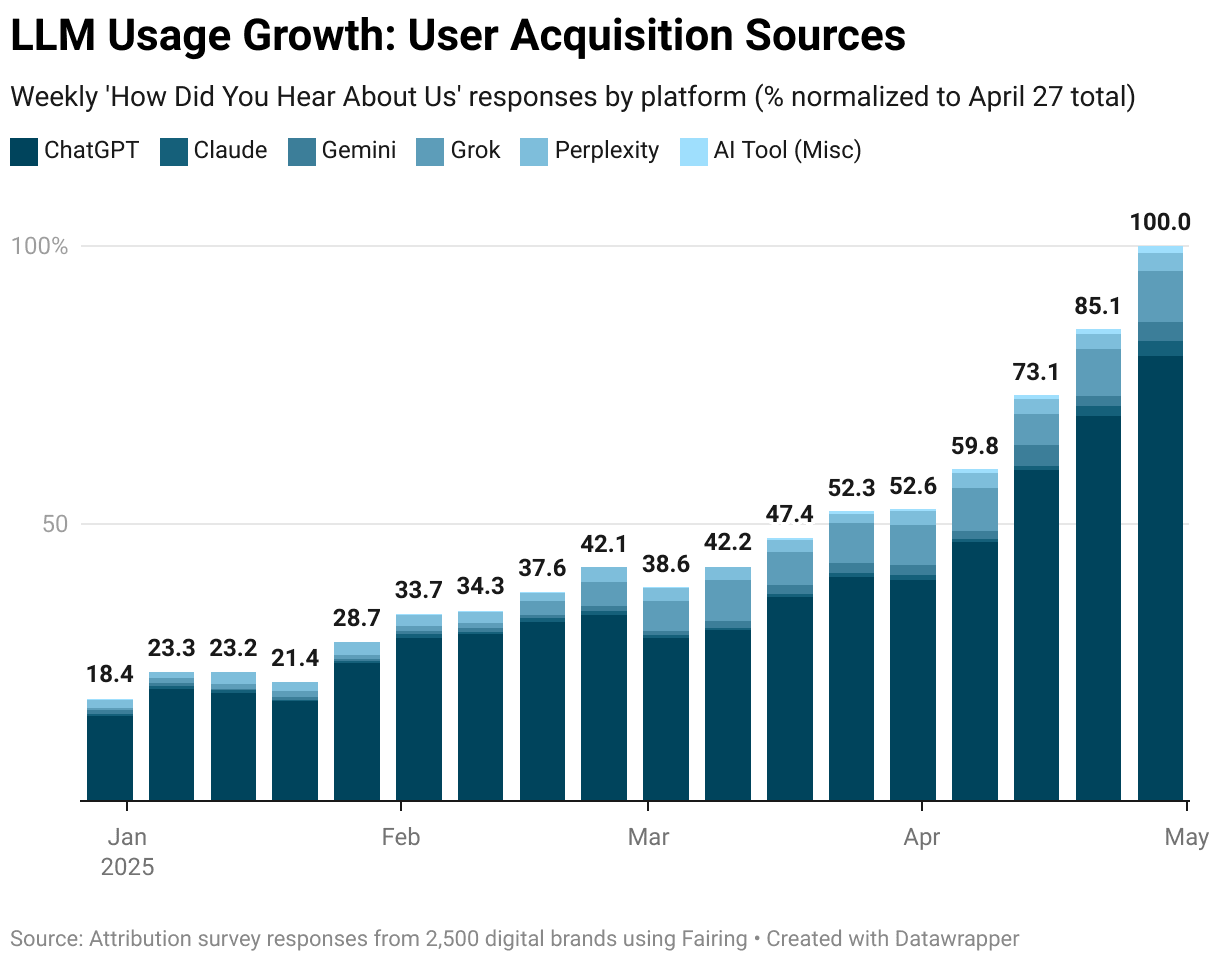
Consumers are discovering products in ways that escape traditional analytics. Large language models have emerged as a new layer between brands and buyers, mediating recommendations and search in real time. This isn't simply a new channel—it is a structural change in how decision-making flows, where a single model can influence millions of micro-decisions across contexts.
The Implication
Conventional attribution frameworks fail to capture this layer. Click-through rates, paid media impressions, and even organic search metrics now understate the role of AI-guided discovery. Brands relying solely on established funnels risk missing emerging patterns of engagement and misallocating attention and investment.
The Mechanism
LLMs reason through a combination of context, relevance, and associative memory. They do not operate as passive search engines; they synthesize signals across disparate data points to surface recommendations. Understanding this mechanism explains why a product might appear prominently in a model's response even absent traditional SEO or social amplification. It is influence without traceable clicks, a new topology of visibility.
The Strategic Response
Modern teams must treat AI as an infrastructure layer rather than a feature toggle. This means integrating discovery insights into product positioning, aligning structured data for interpretability, and observing LLM-mediated behaviors continuously. Tools like Visibella make this observable at scale, translating opaque AI interactions into actionable intelligence that can inform both strategy and creative decisions.
The Future State
Brands that internalize AI as a decision layer will operate with anticipatory intelligence rather than reactive metrics. Discovery becomes a distributed, dynamic system; measurement and influence converge in real time. In this future, understanding and shaping the models that guide choice is as critical as any traditional marketing channel.